
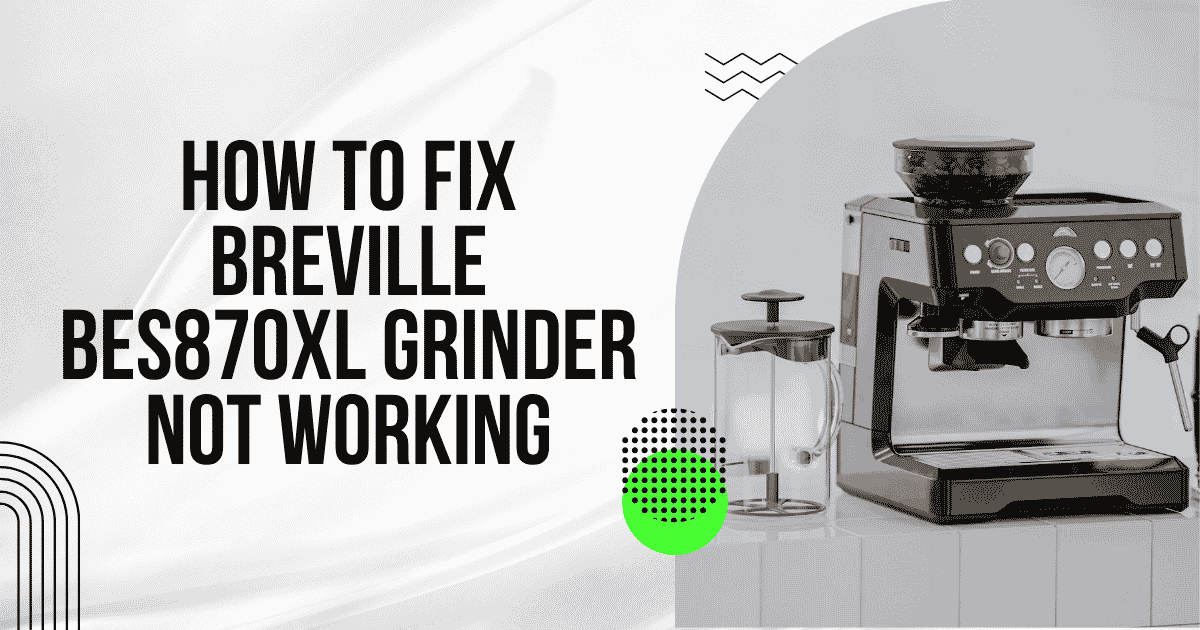
The Breville BES870XL Barista Express integrates a conical burr grinder directly into the espresso machine chassis, making it one of the most convenient home espresso systems available. However, this integrated design also means that when the grinder stops working, the entire workflow comes to a halt. A non-functional grinder on the BES870XL can stem from several distinct failure points, and correctly identifying which one is causing the problem is the first step toward a lasting repair.
Understanding Why the BES870XL Grinder Stops Working
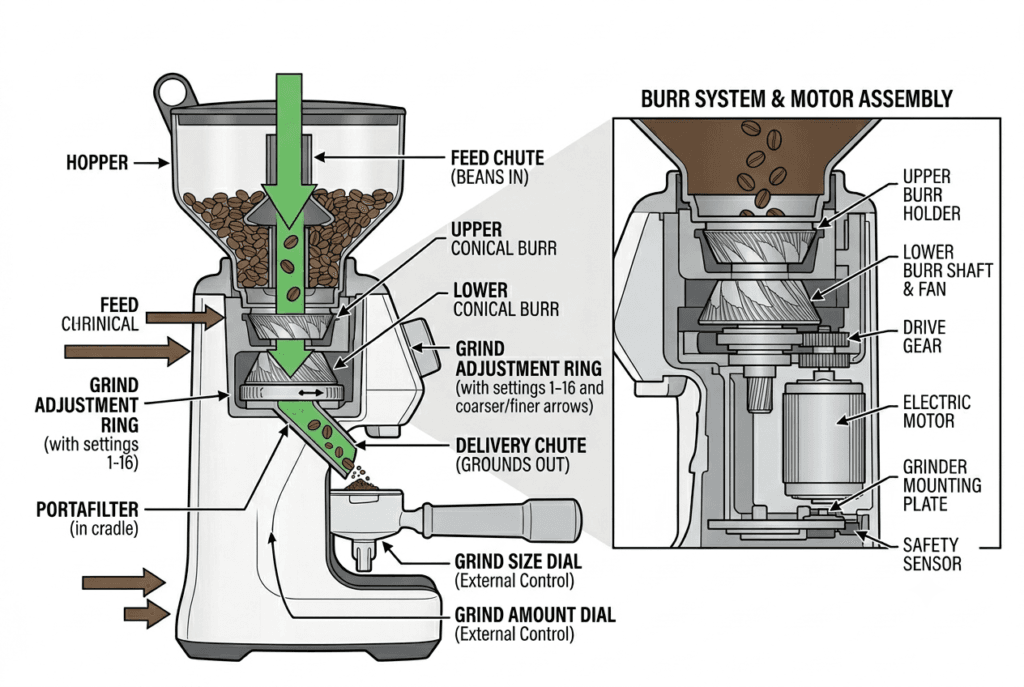
Before attempting any repair, it helps to understand the mechanical and electrical anatomy of the grinder system. The BES870XL uses a DC motor that drives a set of conical stainless steel burrs. The upper burr is stationary and adjustable; the lower burr rotates. Coffee beans fall through a feed chute, get drawn between the two burr surfaces, and exit as grounds through a delivery chute toward the portafilter basket.
When any component in this chain fails, the motor, the burrs, the chute, the bean hopper sensor, or the grind amount selector, the grinder either stops completely, produces no output despite running, or grinds inconsistently. Each symptom points to a different root cause.
Common Causes of BES870XL Grinder Failure
1. The Grinder Is Jammed with Coffee Grounds or a Foreign Object
This is the most frequent cause of a grinder that appears dead but is actually stalled. When a hard object, a pebble, a dried coffee cherry fragment, or a compacted mass of oily grounds lodges between the burrs, the motor cannot turn. In many cases the motor will hum briefly, attempt to start, and then cut out as the thermal overload protector trips.
To check for a jam: remove the bean hopper, clear any remaining beans, and look down into the grinding chamber with a flashlight. Attempt to rotate the upper burr by hand. If it resists or will not turn, there is a mechanical obstruction between the burr surfaces. The correct procedure for clearing a jam is covered in detail in the companion guide Breville BES870XL Grinder Jammed? Easy Fix Guide, which includes the safe method for extracting foreign objects without damaging the burr teeth.
2. The Bean Hopper Is Not Seated Correctly
The BES870XL has a safety interlock that prevents the grinder from operating when the bean hopper is not properly locked into position. The hopper must be rotated clockwise until it clicks firmly into the locked position. If the hopper is slightly misaligned or the locking tab is worn, the machine will not recognize it as secured and will refuse to grind. Remove the hopper completely, inspect the locking notch on its base, and re-seat it with deliberate clockwise pressure until the mechanical click is audible and tactile.
3. The Grind Amount Selector Is Set to Zero or Is Damaged
The grind amount dial on the front panel controls how many seconds the grinder motor runs per dose. If this dial is set to the minimum position, the grinder will activate for zero seconds and appear non-functional. Similarly, if the selector’s internal potentiometer is damaged from moisture or wear, it may send a zero-output signal regardless of dial position. Test this by manually holding the Grind button while the dial is set to a mid-range position. If the grinder runs during manual operation but not during the automatic dose cycle, the selector dial or its potentiometer is likely faulty.
4. The Grind Size Dial Is Set Too Fine
When the grind size is adjusted too fine, particularly if the adjustment is made while the grinder is not running, the burrs can close to a gap that is tighter than the motor can overcome at startup. The motor will attempt to spin but stall under the load. This is especially common after users experiment with very fine settings for espresso dialing. The solution is to coarsen the grind setting several clicks while the grinder is running (not stationary), which allows the burrs to separate slightly. Never adjust grind size on a static, non-running grinder.
5. The Grinder Motor Has Overheated and Tripped the Thermal Overload
The BES870XL grinder motor includes a thermal overload protector that cuts power when the motor temperature exceeds a safe threshold. This can happen after extended or repeated grinding cycles without rest, particularly in warm ambient environments. When the thermal overload trips, the grinder will not respond to any inputs until the motor cools down. Allow the machine to sit unplugged for 20 to 30 minutes before attempting to use the grinder again. If thermal overload tripping becomes a regular occurrence, it indicates either abnormal grinder load (very oily beans, too-fine settings) or a motor that is beginning to fail.
6. Electrical Fault in the Grinder Control Board
A less common but serious cause of complete grinder failure is a fault in the control PCB that manages the grinder motor circuit. Voltage spikes, moisture ingress, or component degradation can interrupt the signal between the grind selector and the motor driver. This type of failure typically requires board-level diagnosis with a multimeter and, in most cases, a control board replacement.
Step-by-Step Diagnostic Procedure
- Reset the machine: Unplug the BES870XL from the wall outlet and leave it unplugged for five minutes. Plug it back in and attempt to grind. This clears any temporary fault states in the control electronics.
- Check the bean hopper lock: Remove and re-seat the hopper. Confirm the click.
- Check the grind amount dial: Set it to a mid-range value (approximately 5 out of 10) and attempt a manual grind by pressing and holding the Grind button.
- Coarsen the grind setting: With the machine running (even if the grinder is not producing output), turn the grind size dial toward a coarser setting by 3–4 clicks.
- Inspect for a jam: Remove the hopper and look into the grinding chamber. Attempt to rotate the upper burr by hand. If resistance is felt, follow the jam-clearing procedure.
- Check the grind chute: Even if the motor is running, a blocked delivery chute will prevent grounds from reaching the portafilter basket. Use a small brush or a wooden skewer to probe the chute opening. For persistent blockages, see the guide on Coffee Grounds Stuck in Grinder Chute.
- Assess motor condition: If the motor hums but does not spin, and no jam is present, the motor capacitor or windings may be failing. If the motor makes no sound at all and all other checks have passed, the fault is likely in the control board or wiring harness.
When to Repair vs. Replace the Grinder Assembly
For BES870XL units that are out of warranty, a grinder motor replacement is a viable repair for intermediate-level technicians. Breville sells replacement grinder motor assemblies, and the component is accessible after removing the top panel and the bean hopper assembly. However, if the control board is faulty, the repair cost often approaches the cost of a third-party grinder upgrade. At that point, many users choose to decouple their grinding from the BES870XL entirely, using a standalone precision grinder and using the BES870XL purely as the espresso brewing component.
Preventive Measures to Keep the Grinder Running
The most effective way to prevent grinder failure is to use the right coffee beans and maintain the burrs consistently. Avoid oily, dark-roasted beans if possible, as their oils coat the burrs and accelerate clogging. Use a dedicated grinder cleaning product (like Urnex Grindz or a dedicated grinder cleaning tablet) monthly to absorb oil buildup from the burr surfaces. Keep the grind size adjustment within the range recommended for espresso, typically settings 6–8 on the BES870XL scale. Extreme fine adjustments place excessive load on the motor and increase jam risk significantly.